
System Requirements for PhotoRobot
The following documentation describes the system requirements, required hardware specifications, and recommended computers to run PhotoRobot Controls Application. This includes information on computer compatibility, USB cables, and suitable barcode scanners. In order to run PhotoRobot Controls Application, your computer and equipment must meet these technical specifications, outlined below.
Choosing Your Platform
While PhotoRobot Controls runs on both macOS and Windows, PhotoRobot strongly recommends Apple-based systems for production use. We treat Apple as an integral part of the PhotoRobot system rather than an optional preference.
There are two reasons for this. Firstly, Apple offers a small, well-defined set of hardware configurations which we can fully test and validate every release against. This provides predictable, reproducible results in high-volume production. Secondly, Apple-based systems deliver an excellent cost-performance ratio, and a low total cost of ownership. Additionally, due to treating the computer as part of the delivered system, we minimize the need for internal IT intervention and third-party coordination on the customer’s side.
Windows remains fully supported, and we ship a Windows build. However, Windows is an open platform consisting of a very large number of hardware components and driver vendors. As a result, platform-specific operational issues can arise that originate outside of PhotoRobot software – most commonly, graphics-card and USB drivers. Resolving these issues is then the responsibility of the customer together with the relevant third-party vendor, as this hardware is not part of PhotoRobot’s supply. PhotoRobot supports its software; hardware-level and driver-level issues specific to a given Windows configuration must be handled with that component or driver vendor.
In short: Choose Apple to ensure the platform is a tested part of your system; choose Windows to meet corporate policy or preference, but plan for the occasional platform-specific issues that you will have to resolve with your hardware and driver vendors.
Operating System Compatibility
PhotoRobot Controls Application is available for the following versions of the operating systems:
- macOS 11 BigSur
- macOS 12 Monterey
- macOS 13 Ventura
- macOS 14 Sonoma
- macOS 15 Sequoia
- macOS Tahoe 26
- Windows 10 - 64bit
- Windows 11
Recommended Hardware
MacOS
Windows
Note: Apple-based systems are recommended for optimal performance and stability with PhotoRobot software in production use. Refer back to the section “Choosing Your Platform” for more information.
Networking
PhotoRobot is delivered with its own subnet, connected to the customer’s network. Internet connection is required.
The minimum recommended speed to the internet is 20/20 Mbps - for Cloud and Hybrid subscriptions.
The following services / ports need to be open to the internet:
- TCP, 443 (https), outbound
- TCP, 80 (http), outbound
- UDP, 53 (dns), inbound, outbound
- ICMP (ping), recommended
Access to these servers on the Internet is required:
- *.photorobot.com - Required PhotoRobot Cloud services
- as-unirobot.azurewebsites.net - Activation server for PhotoRobots, callhome service function
For technical documentation on network configuration, refer to PhotoRobot Detailed Networking Prerequisites.
Recommended Computers
The following Apple-based systems are recommended for optimal performance and stability, with options varying based on different size screens.
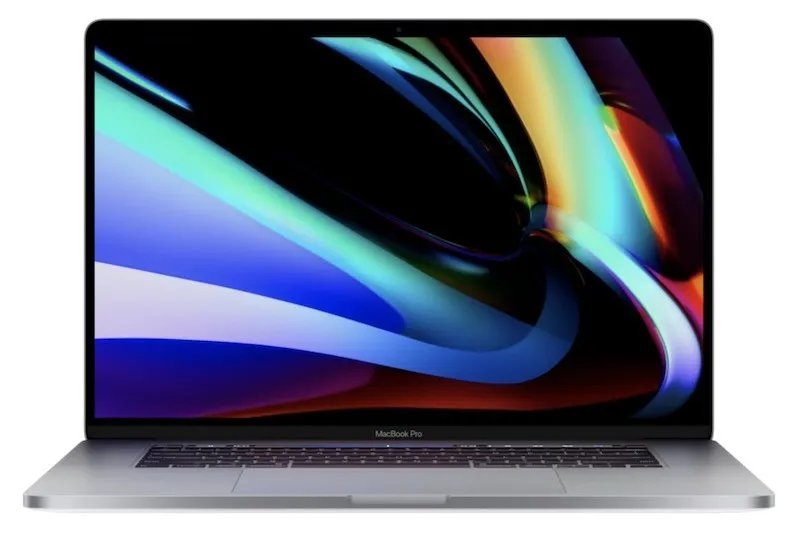
- MacBook Air / Pro 15” / 16” (Excellent Portability)
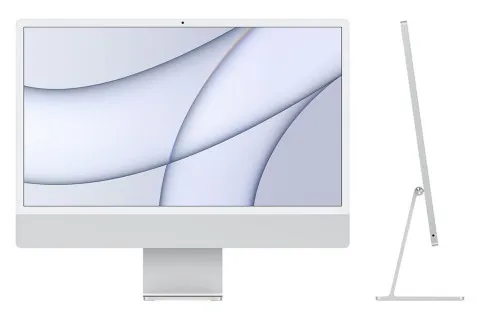
- iMac 24” (Reasonable price, all-in-one solution)
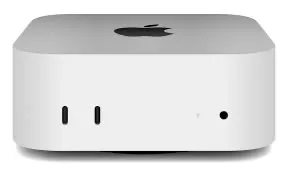
- Mac Mini (Reasonable price, 3rd party screens available)
All of the above computers perfectly meet PhotoRobot’s technical requirements. Detailed specifications then depend on expected cloud or local storage and processing. In general, an optimal choice will offer 16 - 32 GB RAM, and 256 - 512 GB SSD.
Note: The standard Apple Silicon configurations we recommend are fully sufficient for Controls. A higher core count does not improve the capture and editing performance – the additional cores in Max / Ultra chips aim to support heavy 3D and video rendering, not the PhotoRobot workflow. Thus, the recommended base configurations are also considerably more affordable. (Meanwhile, the high-core Mac Studio remains a great option, specifically for photogrammetry 3D reconstruction.) In regards to screen size, a display of at least 15” is recommended for optimal viewing of PhotoRobot Controls interface.
Compatible Computers and USB Cables
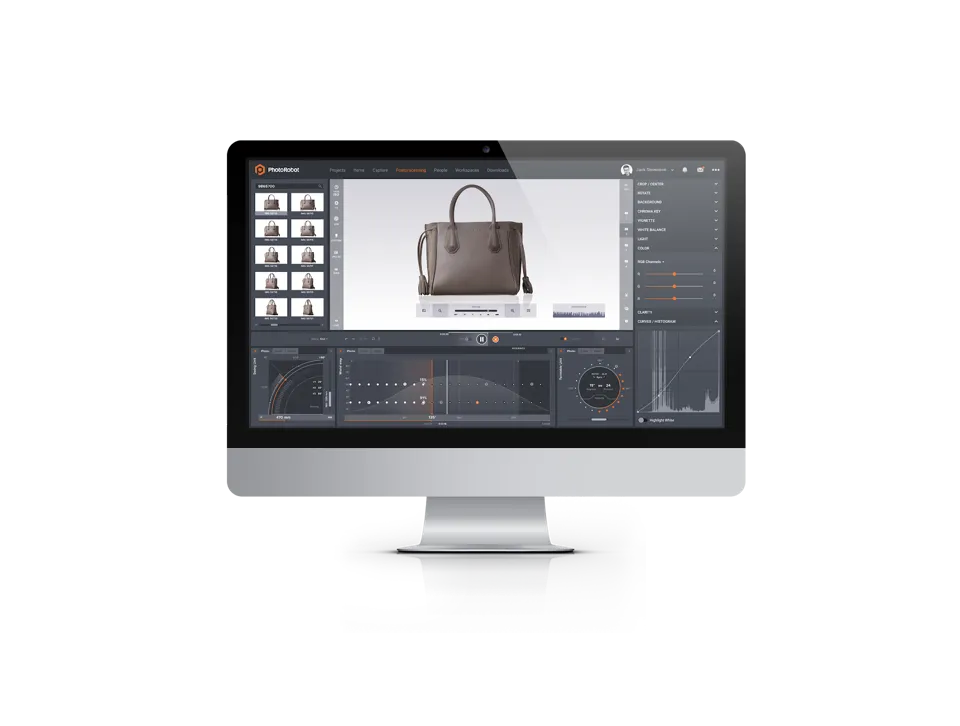
The PhotoRobot _Controls Drivers to connect cameras, robots, and lights support both macOS and Windows systems. However, remember that PhotoRobot strongly recommends using an Apple-based system for production use (see “Choosing Your Platform” for more information).
Although image processing takes place in the cloud, it is appropriate that the computers intended for image processing are equipped with an SSD (or Fusion Drive) and a graphics card allowing GPU utilization.
For computers that are not intended for image processing, any operating system with a modern web browser (we recommend Chrome) can be used.
When using multiple cameras at one workplace (working simultaneously – e.g. with a MultiCam system), it is not recommended to use a USB HUB. Instead, we recommend connecting cameras directly to the USB ports of the computer. If it is necessary to connect more cameras than there are computer ports (for example, the recommended iMac usually has 4), it is advisable to use (high-quality) hubs to connect up to 2 cameras per port. Otherwise, the camera USB bus overloads, and the system is unreliable. Note: Please always use high-quality USB cables with a 5-meter length maximum.
Suitable Barcode Scanners
It is possible to use suitable barcode scanners with PhotoRobot systems to:
- Automatically insert the product code into its label in PhotoRobot _Controls;
- Trigger a photo sequence.
In general, barcode readers can be divided into wired and wireless devices. Wired barcode readers connect to the USB of the computer, and are limited by the cable length (typically between 2 and 5 m). Wireless readers have either a USB-powered base in which they are charged or wireless connection to a computer via a proprietary USB dongle. In an ideal environment with no obstructions and direct visibility, the range of wireless scanners is up to 100 m. In practice, however, we recommend you to account for a range of 10 - 15 meters depending on the environment (obstacles, direct visibility, electromagnetic interference, etc).
Recommended Barcode Scanners
The following barcode scanner models have been tested in practice by PhotoRobot, and are mechanically and electrically suitable.
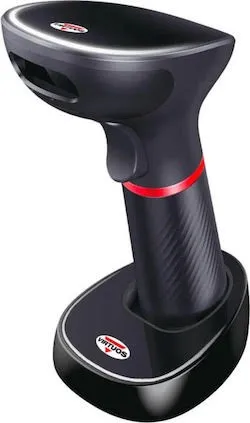
- Virtuos HW-855A - 2D (Tested and in Use by PhotoRobot)
- Barcode reader for 1D and 2D codes (great for QR)
- Handheld scanner with cordless data transfer and a charging cradle
- Fast reading (60 characters per second) with greater sensitivity for reading corrupted codes or codes on screens
- User-replaceable battery (type 18650)
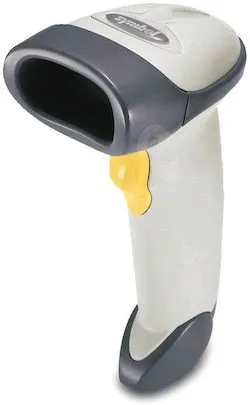
- Motorola LS2208 (Tested by PhotoRobot)
- Barcode reader for 1D codes
- Permanent connection of USB reader to computer is necessary
- Suitable for fast-paced environments, the device is rugged and tested to withstand drops
- Tempered glass window with scratch resistance that retains good readability
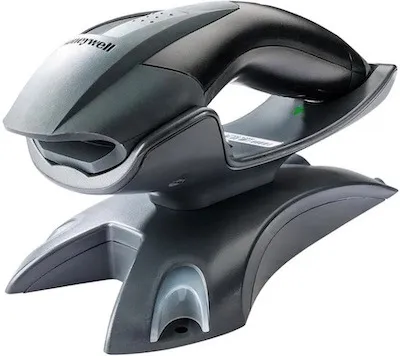
- Honeywell Voyager 1202g Station (Tested by PhotoRobot)
- Base connected to a computer via USB; scanner communication with base via Bluetooth
- Scanning of all standard 1D barcodes possible 10 meters from base
- Long battery life with 12 hours of reliable operation thanks to Li-Ion battery
- Quick battery replacement without the need for tools
- Automatic interface configuration and able to read even low-quality barcodes – including damaged or blurry codes
- Feature for quickly finding a reader at the press of a button on the base – the reader responds with beeps and flashes
Other Barcode Scanner Models (Not Tested by PhotoRobot)
For examples of other barcode scanner models (not tested by PhotoRobot), there is the Birch BZ-R01, or the Birch BS-115. Note: The declared parameters of these models comply with PhotoRobot requirements, but the models themselves have not been tested in operation with PhotoRobot. These models are thus for example purposes only, and should be discussed with a PhotoRobot specialist technician for consideration if required by the customer.
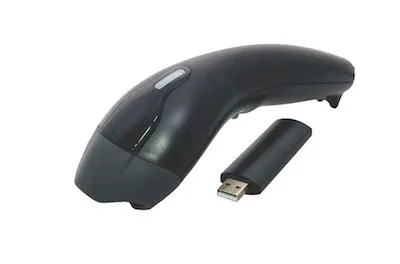
- Birch BZ-R01 (not tested in operation with PhotoRobot)
- Wireless CCD barcode scanner
- “EZ Pair” technology for scanning barcodes up to a distance of 100 meters from the computer – however, with distance influenced by the environment
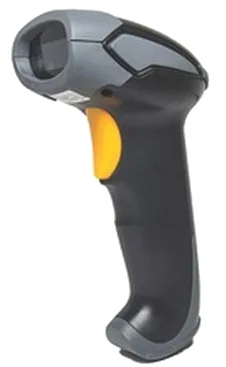
- Birch BS-115 (not tested in operation with PhotoRobot)
- Handheld laser barcode scanner
- Connection to computer via USB cable
- Recognition of all standard 1D barcodes
- Affordable model
Recommended Cameras
When choosing a new camera for a PhotoRobot system, refer to the complete list of Recommended Cameras for PhotoRobot Systems. This guide aims to help customers choose the best recommended camera or cameras for long-term use with their PhotoRobot.
Important: It is always advisable to first contact PhotoRobot before purchasing a new camera for your system. Also, be aware that only the latest mirrorless Canon camera models are recommended for automated photography.
Although, as of the release of PhotoRobot Controls App 2.5.4, there is support for any camera through third-party camera integration. However, note that the use of compatible handheld cameras over Wi-Fi or cable connection may still cause issues. Issues include frequent disconnections (primarily due to timeout), and complications with cable or connection lengths. If using an iPhone camera via PhotoRobot Touch though, no issues arise. To check the compatibility of all supported Canon and 3rd party camera models, see PhotoRobot Compatible Cameras for reference.
Note: To better understand the impact of camera resolution and lens selection, refer to PhotoRobot’s Guide on Understanding Camera Resolution. For user support on setting up and connecting a compatible camera, refer to the support manual PhotoRobot Camera Configuration.


EOS Rebel Series


EOS DSLR Series


EOS M Mirrorless Series


PowerShot Series


Close-Up / Handheld

The Canon EOS Rebel Series offers beginner-friendly DSLR cameras with solid image quality, intuitive controls, and versatile features. Ideal for photography enthusiasts, these cameras provide reliable autofocus, vari-angle touchscreens, and Full HD or 4K video recording.
Connection
Resolution (MP)
Resolution
The Canon EOS DSLR Series delivers high-quality images, fast autofocus, and versatility, making it ideal for both photography and video production.
Connection
Resolution (MP)
Resolution
The Canon EOS M Mirrorless Series combines compact design with DSLR-like performance. Featuring interchangeable lenses, fast autofocus, and high-quality image sensors, these cameras are great for travelers and content creators seeking portability without sacrificing image quality.
Connection
Resolution (MP)
Resolution
The Canon PowerShot Series offers compact, user-friendly cameras for casual shooters and enthusiasts. With models ranging from simple point-and-shoots to advanced zoom cameras, they provide convenience, solid image quality, and features like image stabilization and 4K video.
Connection
Resolution (MP)
Resolution
The Canon Close-Up & Handheld Cameras are designed for detailed, up-close photography and video. Compact and easy to use, they offer precision focus, high-resolution imaging, and versatile macro capabilities—perfect for vlogging, product photography, and creative close-ups.


