What Sets Pots, Pans, and Bakeware Apart
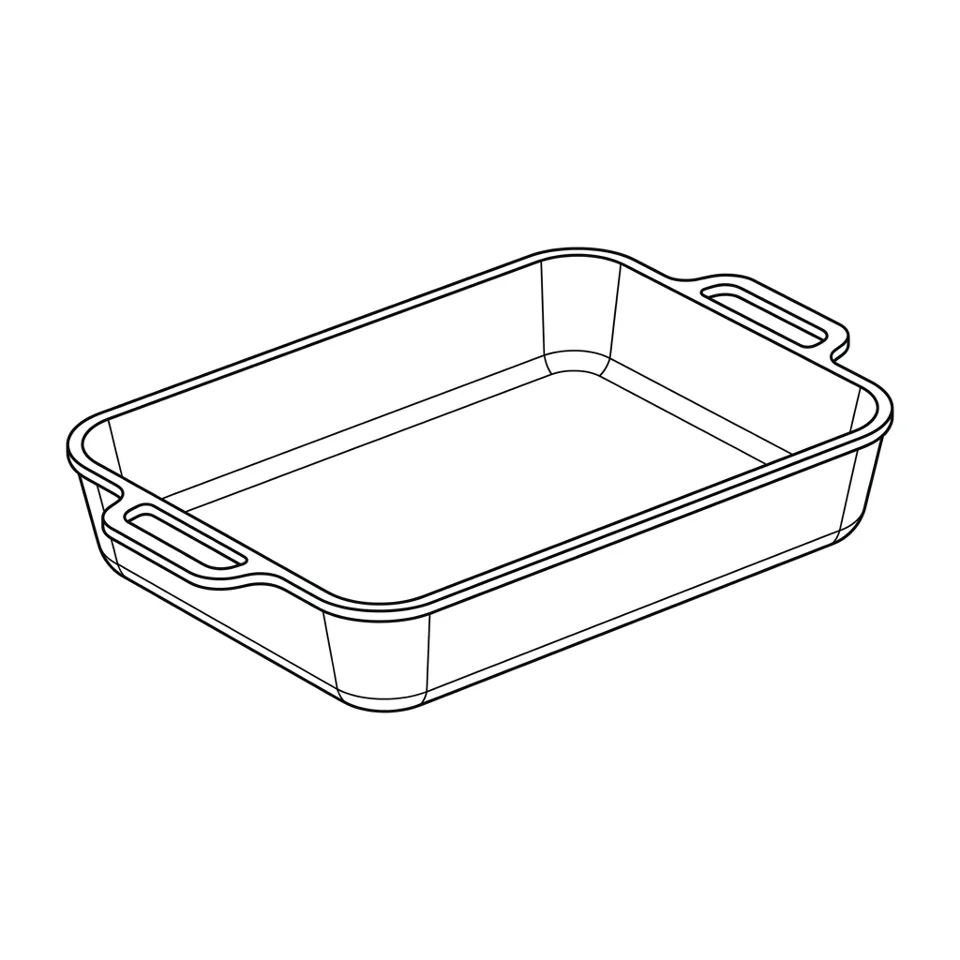
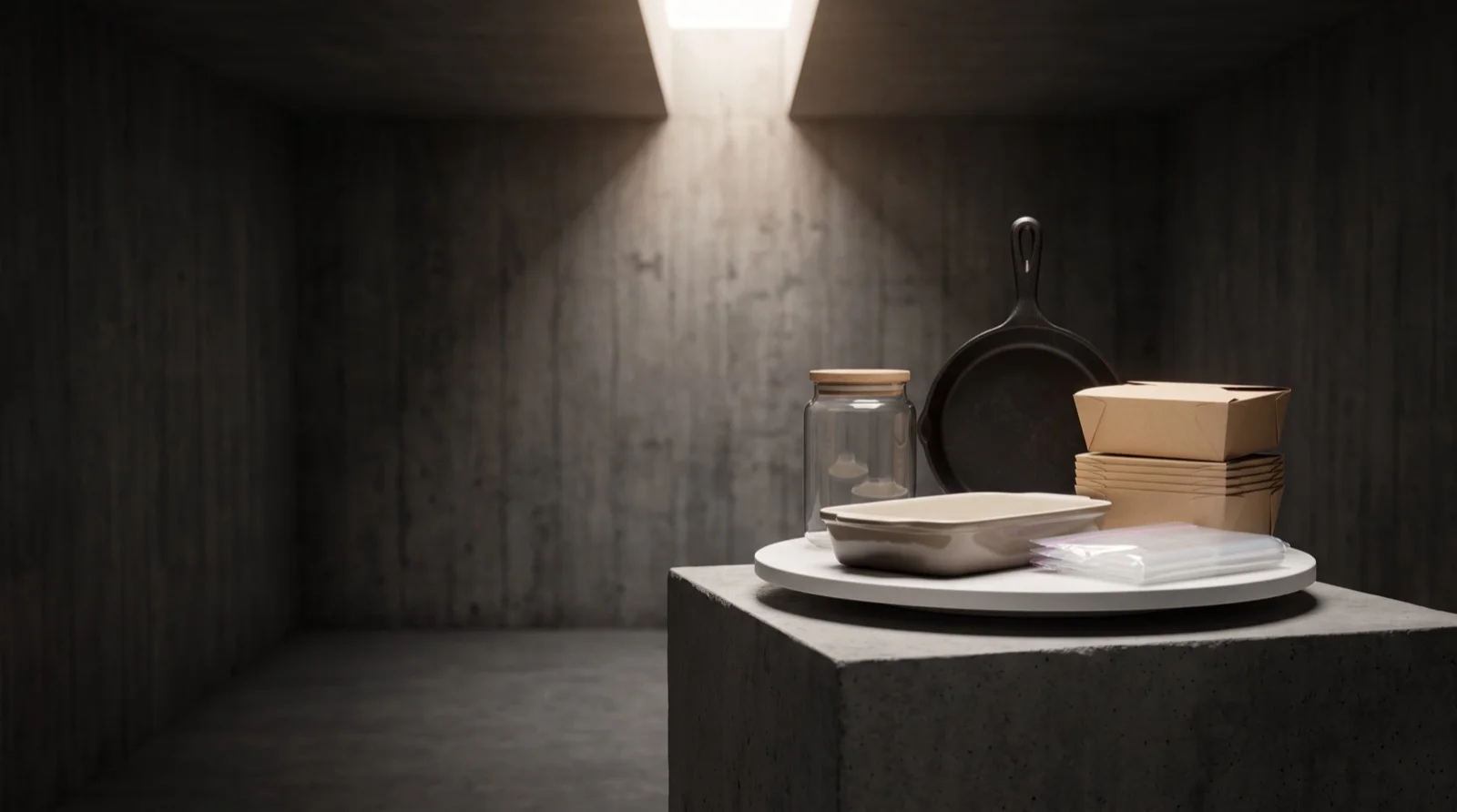
Pots, pans, and bakeware combine polished stainless steel, cast iron, aluminum, and nonstick coatings in one product line, and buyers compare them on details: the finish of the base, the rivets on the handle, the fit of the lid, and the coating inside. A frying pan is a mirror on the outside and a dark, matte surface on the inside; a cookware set adds the problem of showing many pieces in one image without clutter. Bakeware and molds are lighter and flatter, often silicone or coated steel, and many are bought for the shape they leave in the food.
The Common Baseline
Preparation
Unpack every piece, remove stickers and protective films, and wipe off fingerprints and packing dust; stainless steel shows water marks, so dry it with a lint-free cloth. Check nonstick coatings and enamel for scratches. Decide the handle direction for each item and keep it the same across the range, and for sets, plan the nesting or the arrangement before the session. Have lids clean and ready, since buyers want to see how they fit.
Light
Polished outer walls reflect the studio, so surround pots and pans with large diffused panels and use cards to draw clean lines along the rim and the handle. The inside of a nonstick pan is dark and matte: give it a separate, lower light, or angle the pan so the coating catches soft light without glare.
Cast iron and dark enamel absorb light and need more exposure on the surface, while silicone bakeware is satin and colorful; a soft key light from the side shows its shape and the pattern of the mold.
Shots
Plan a front packshot on white, a 360-degree spin for pots with handles and lids, close-ups of the base, the rivets, and the coating, a top-down view of baking sheets and molds, and a group arrangement for sets. An in-use or context shot helps buyers judge the size of a pan against food or a stovetop.
How the Groups Differ
The two groups behave very differently on camera. Pots and pans are heavier, mirror-bright outside and dark inside; bakeware is lighter, flatter, and mostly satin or colored, and it is often shown from above.
Across the 2 groups in our data, the typical longest side runs from 5 cm to 80 cm, and weights from under 0.5 kg to 20 kg. Surfaces by number of groups: mirror (1), satin (1). The handling notes that recur most are many parts (2 of 2).
| Group | Typical size | Weight | Surface | Handling | Best-fit machines |
|---|---|---|---|---|---|
| Pots, pans and cookware sets | 5 cm to 80 cm | 0.5 kg to 20 kg | mirror | stands upright, many parts | CUBE COMPACT, CASE 850, C850, CL850, CUBE |
| Bakeware, molds and food decorations | 5 cm to 30 cm | up to 2 kg | satin, mixed | lies flat, many parts | CASE 850, C850, CL850 |
Which Setup for Which Product
| Product | Setup | Machines |
|---|---|---|
| Single pots and pans | Closed diffusion around the item, the handle at a fixed angle, and a separate low light for the inside coating; spin with the lid on and off. | CUBE COMPACT, CASE 850, C850, CL850, CUBE |
| Cookware sets | Planned group arrangement on a larger plate from a raised angle, then each piece alone. | CUBE COMPACT, CASE 850, C850, CL850, CUBE |
| Baking sheets and molds | Top-down view with the camera square to the surface and a soft side light for the shape of the mold. | CASE 850, C850, CL850 |
| Small decorations and toppers | Macro close-ups and a group shot in the pack. | CASE 850, C850, CL850 |
PhotoRobot Machines by Size
- 5 cm to 30 cm: Bakeware, molds and food decorations. Recommended: CASE 850, C850, and CL850.
- 5 cm to 80 cm: Pots, pans and cookware sets. Recommended: CUBE COMPACT, CASE 850, C850, CL850, and CUBE.
Limits and What to Check
- The inside of a pan and the outside need different light; one setup rarely shows both well, so plan two angles.
- Stacked sets hide pieces; show the set nested once and spread out once.
- Heavy cast iron and large sets may exceed what a light glass table carries; check the weight against the machine first.
- Glass lids reflect like any glass; light them from behind or the side so the rim and the knob read.
Next Step
Start with the largest product you plan to shoot from this guide, typically pots, pans and cookware sets at 5 cm to 80 cm: enter its size in the Sharp Zone Planner to see whether it stays sharp through a full spin and which camera distance and aperture that needs.
For the light, compare FOMEI Strobes and FOMEI LED Roll Panels on the studio lighting page. Strobes in large softboxes control the long highlights on polished steel, and the LED Roll Panels keep the background even behind a row of pans in a set.
Then send a short list of the pots, pans and bakeware you plan to shoot, with the largest and the heaviest piece, the shots you need, and your monthly volume, to PhotoRobot sales; they confirm the machine and the lighting kit before you order.