What Sets Cameras, Lenses, and Optical Instruments Apart
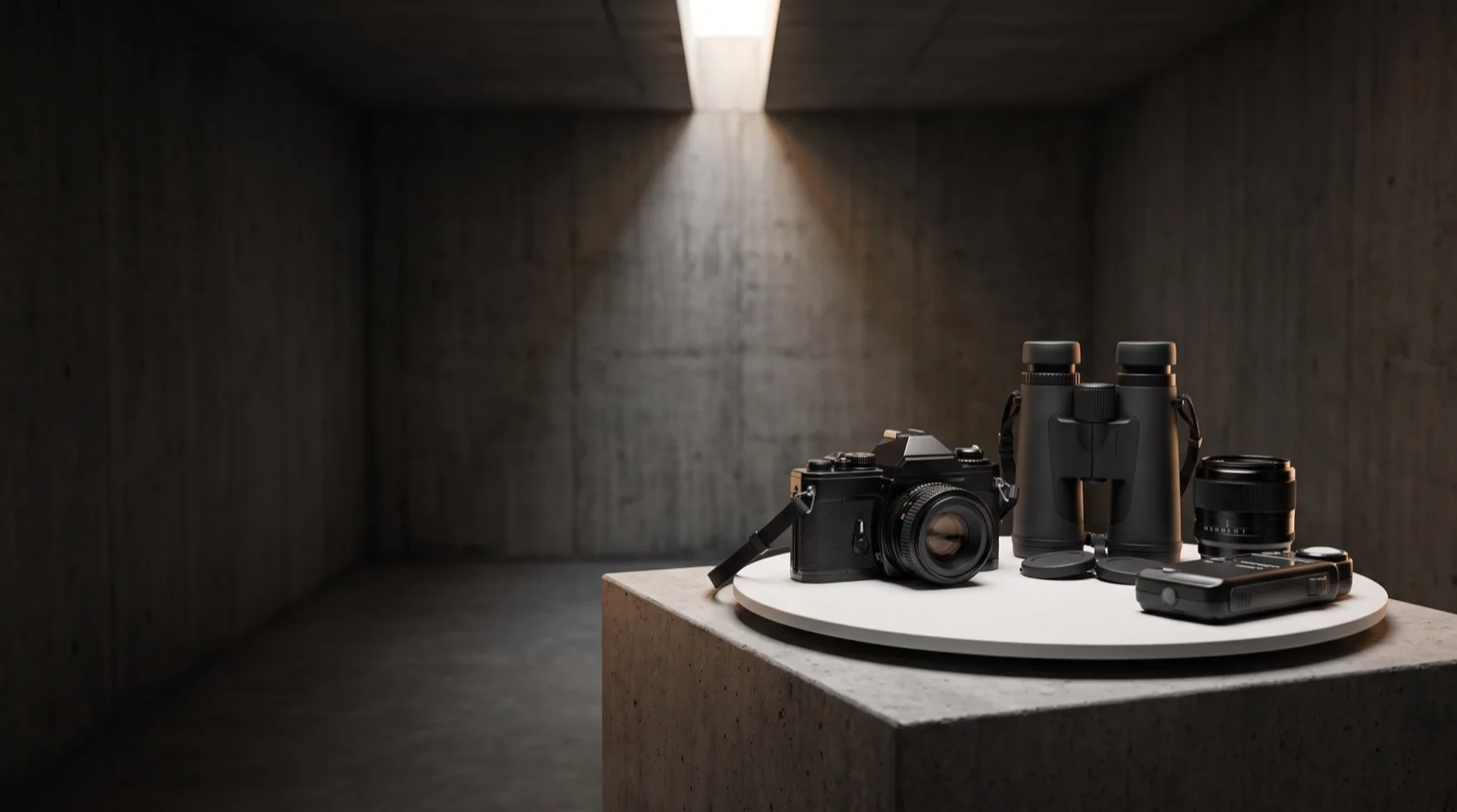
Cameras, lenses, binoculars, telescopes, and flashes are bought by people who know what they are looking at. They check the markings on a lens barrel, the condition of the glass, the dials and buttons on a body, and the coatings on optical elements. The products combine matte black bodies, which swallow light, with glass elements and chrome rings, which reflect it, so one setup has to handle both extremes at once.
The Common Baseline
Preparation
Clean glass elements with a blower and a lens cloth, and fit or remove caps consistently across the range. Wipe dust from black bodies, where it shows clearly on camera, and set dials and switches to the same positions for every item. For used equipment, document the condition honestly, including wear marks, and show serial numbers only if the client wants them shown.
Light
Matte black bodies need more light than you expect and a soft key slightly from the side so texture, grip patterns, and engraved markings read. Chrome rings and glossy surfaces need long, controlled highlights from large soft sources.
Front elements reflect like mirrors and show coatings as colored reflections; angle the lens slightly so the coating shows as a gentle tint rather than as a reflection of the studio.
Shots
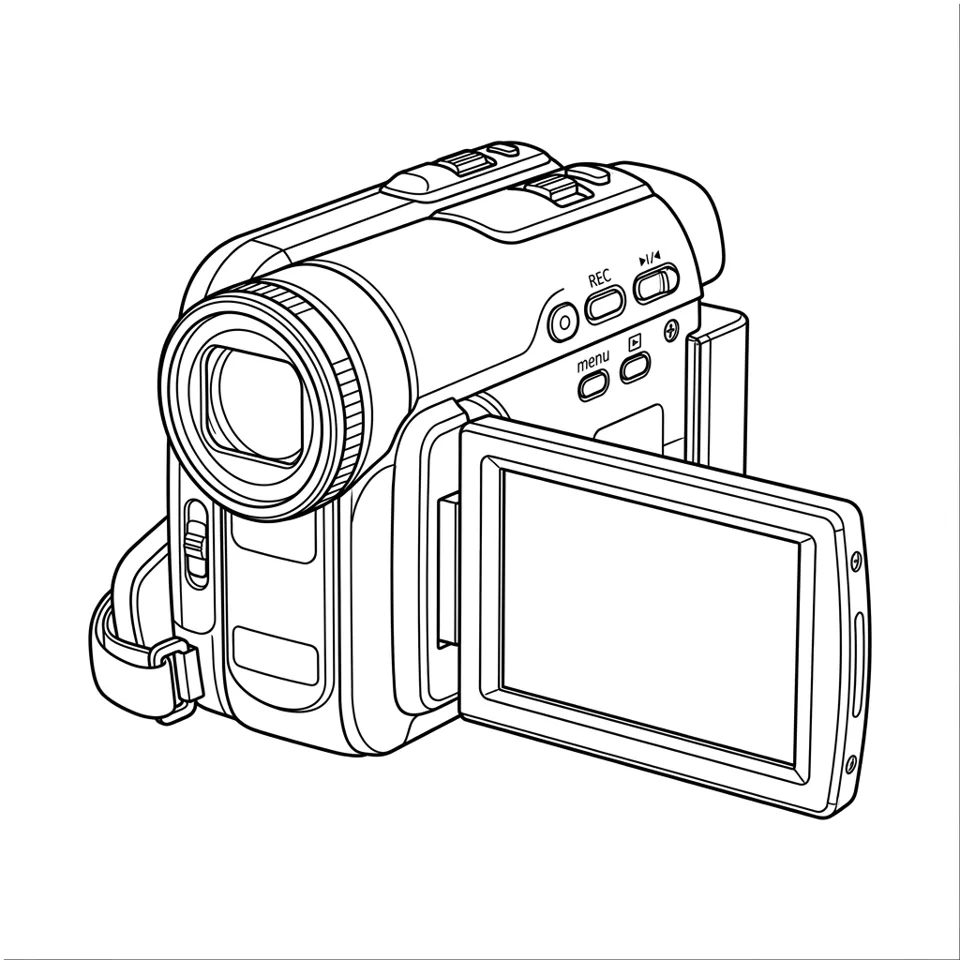
Plan a 360-degree spin, a front packshot on white, close-ups of markings, dials, mounts, and the front element, and open and closed states for flashes with moving heads and cameras with flip screens. Telescopes and binoculars suit an in-use or context shot that shows their size.
How the Groups Differ
The groups share black bodies and glass but differ in size and reflections: lenses and filters are small and mirror-bright, cameras and flashes are mixed, and telescopes and binoculars are larger and armored in rubber.
Across the 5 groups in our data, the typical longest side runs from under 5 cm to 80 cm, and weights from under 0.5 kg to 20 kg. Surfaces by number of groups: mixed (3), mirror (1), satin (1). The handling notes that recur most are stands upright (4 of 5), fragile (3 of 5), and many parts (2 of 5).
| Group | Typical size | Weight | Surface | Handling | Best-fit machines |
|---|---|---|---|---|---|
| Cameras and camcorders | 5 cm to 30 cm | up to 2 kg | mixed | stands upright, fragile | CASE 850, C850, CL850 |
| Camera lenses and filters | up to 30 cm | up to 2 kg | mirror, mixed | stands upright, fragile | CASE 850, C850, CL850 |
| Camera flashes and lighting add-ons | 5 cm to 30 cm | up to 2 kg | satin, mixed | stands upright, many parts | CASE 850, C850, CL850 |
| Binoculars, telescopes and magnifiers | 5 cm to 80 cm | up to 20 kg | mixed, mixed | stands upright, fragile | CUBE COMPACT, CASE 850, C850, CL850, CUBE |
| Camera accessories and kits | 5 cm to 30 cm | up to 2 kg | mixed | many parts, lies flat | CASE 850, C850, CL850 |
Which Setup for Which Product
| Product | Setup | Machines |
|---|---|---|
| Camera lenses and filters | Compact glass table, the lens angled so the coating shows as a tint, and macro close-ups of markings and the mount. | CASE 850, C850, CL850 |
| Cameras and camcorders; camera flashes and lighting add-ons | A soft side key for the black body, long highlights on chrome, and open and closed states for moving parts. | CASE 850, C850, CL850 |
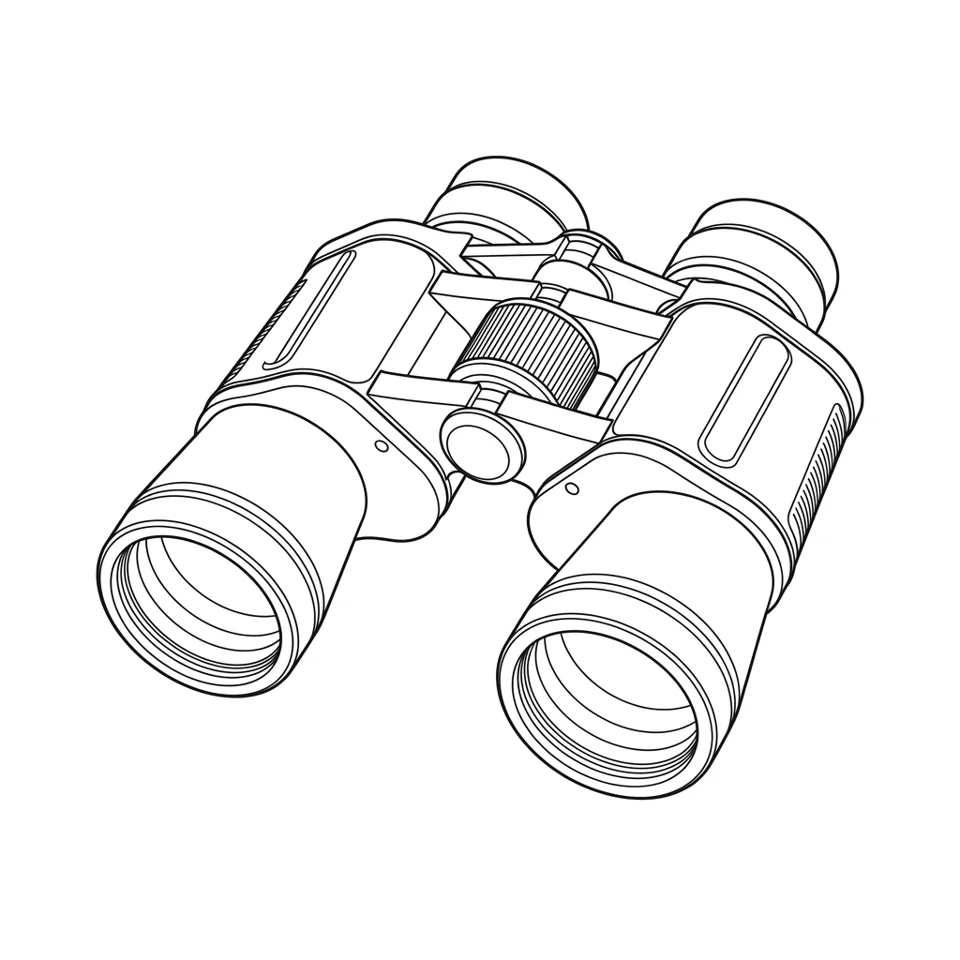
| Binoculars, telescopes and magnifiers | Larger plate for telescopes, a spin, and a context shot for scale. | CUBE COMPACT, CASE 850, C850, CL850, CUBE |
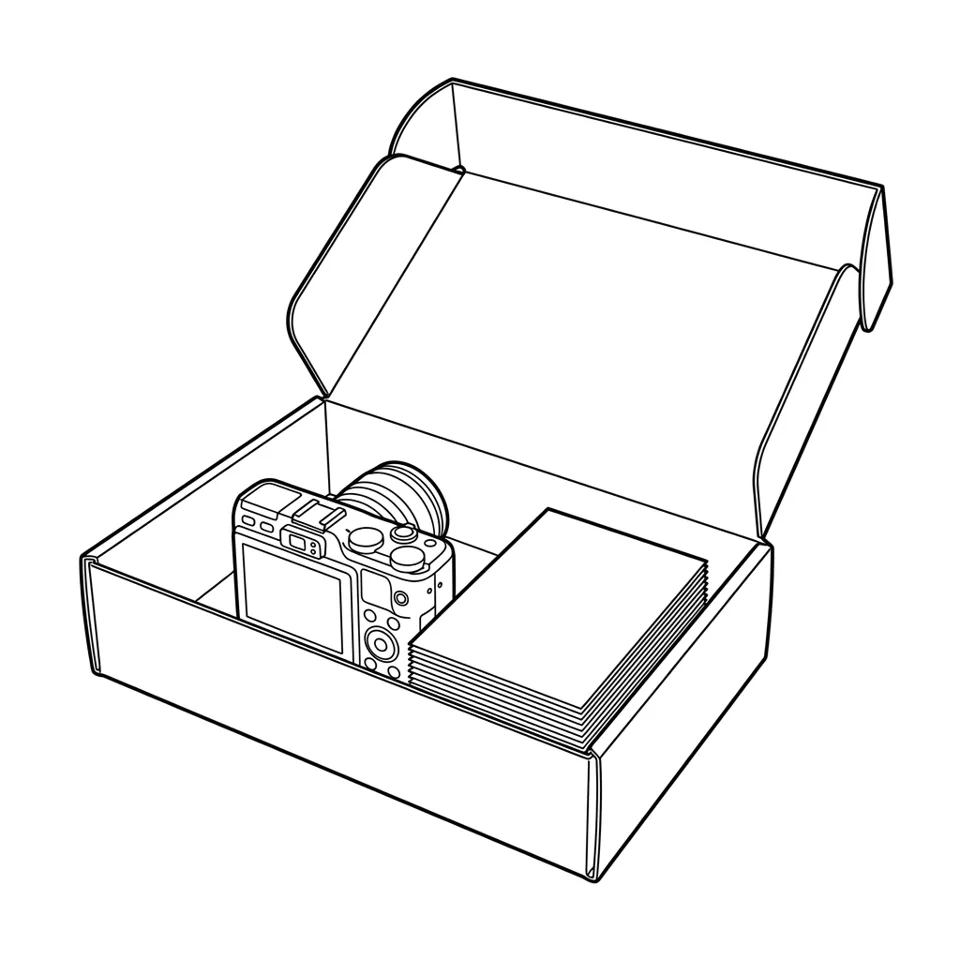
| Camera accessories and kits | Top-down group arrangement of kits and straps with every part visible. | CASE 850, C850, CL850 |
PhotoRobot Machines by Size
- Up to 30 cm: Camera lenses and filters. Recommended: CASE 850, C850, and CL850.
- 5 cm to 30 cm: Cameras and camcorders; camera flashes and lighting add-ons; camera accessories and kits. Recommended: CASE 850, C850, and CL850.
- 5 cm to 80 cm: Binoculars, telescopes and magnifiers. Recommended: CUBE COMPACT, CASE 850, C850, CL850, and CUBE.
Limits and What to Check
- Black bodies and bright glass in one frame stretch the dynamic range; check both ends of the histogram.
- Engraved markings vanish under flat light; use a side light for close-ups.
- Serial numbers may be sensitive; agree with the client before showing them.
- Telescopes on tripods are taller than they look; check the height in the frame before a spin.
Next Step
Start with the largest product you plan to shoot from this guide, typically binoculars, telescopes and magnifiers at 5 cm to 80 cm: enter its size in the Sharp Zone Planner to see whether it stays sharp through a full spin and which camera distance and aperture that needs.
For the light, compare Broncolor Strobes and FOMEI LED Roll Panels on the studio lighting page. Broncolor Strobes keep the same color at every intensity when you switch between black bodies and bright glass, and the LED Roll Panels give the even white that keeps black products cleanly cut out.
Then send a short list of the cameras, lenses and optical instruments you plan to shoot, with the largest and the heaviest piece, the shots you need, and your monthly volume, to PhotoRobot sales; they confirm the machine and the lighting kit before you order.